I want to be careful writing this because I'm not trying to ride anyone's coattails. David Choe doesn't need my words to validate him, and this isn't about name-dropping. I'm writing this because that night stuck with me in a way that changed how I think about the work — and why I do it the way I do.
If you don't know David Choe: he's a Korean-American street artist from Los Angeles who spent years painting on walls, in alleyways, in places nobody was looking, at a time when street art wasn't considered "real" art by the people who decided what real art was. In 2005, a young company called Facebook asked him to paint murals in their first office in Palo Alto. They offered him cash or stock. He took the stock. When Facebook went public in 2012, those shares were worth somewhere in the neighborhood of $200 million — some estimates have put the total value of his stake, over time, closer to $700 million. One decision, made by an artist who had spent years being ignored.
How It Happened
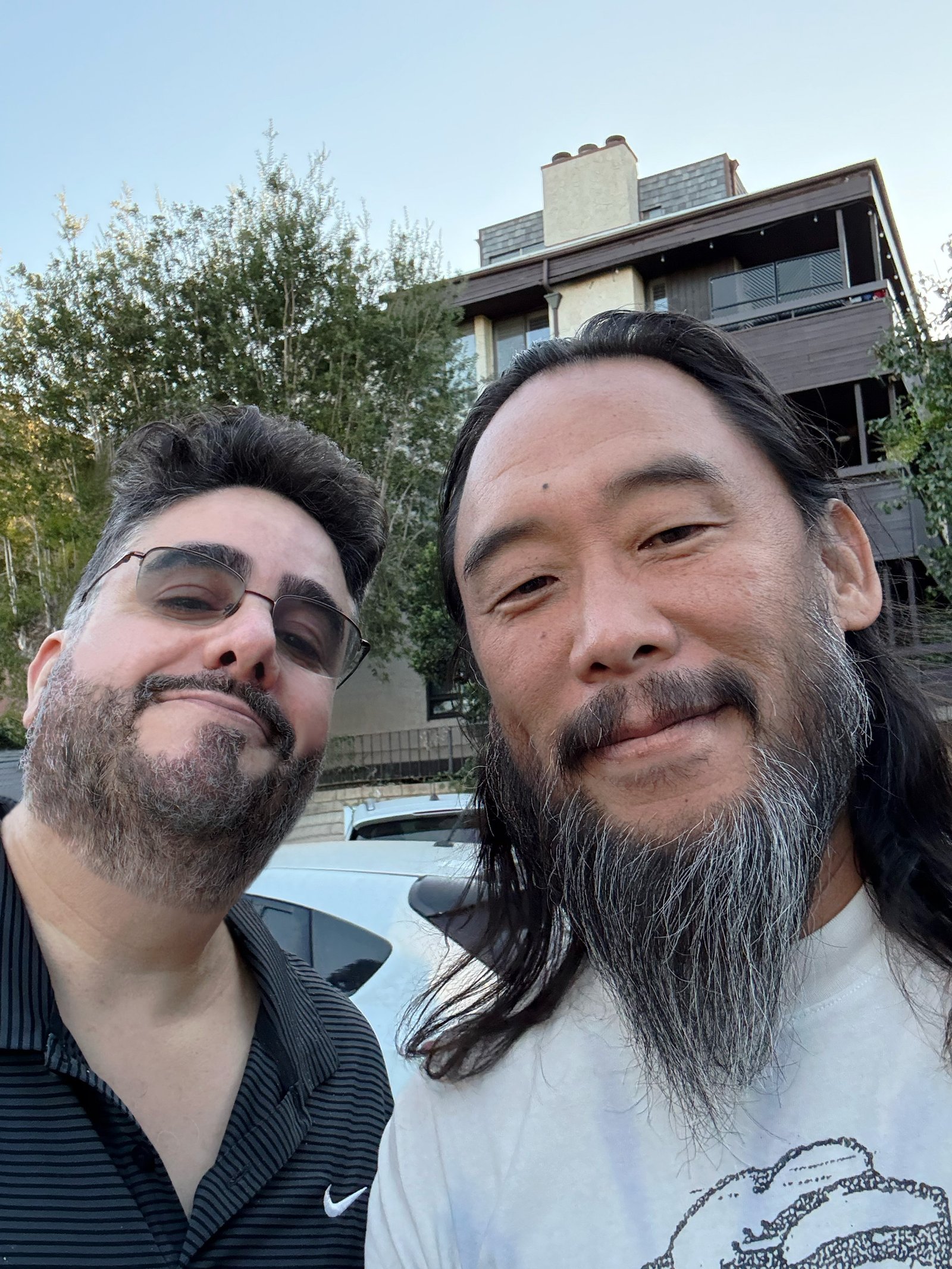
I'm not going to pretend it was some epic planned encounter. This is Los Angeles. Artists exist in overlapping orbits in this city, and sometimes those orbits cross at the right moment. I was at an event in the Valley — not a gallery opening, just people gathered around a shared interest in visual work — and someone introduced us. We ended up talking for a couple of hours.
What struck me immediately was how little he cared about the mythology that had built up around him. The $700 million story gets told a thousand different ways, and you'd think a person in his position would either lean into it or be exhausted by it. He was neither. He just talked about the work. What he was painting. What frustrated him about where art was going. What he thought mattered.
"He said something I keep coming back to: 'The people who told me what art was supposed to be were wrong. They were always wrong.'"
What He Said That Stayed With Me
We talked about the gatekeepers — the galleries, the curators, the critics who decided for decades which art was legitimate and which wasn't. Street art was graffiti. It was vandalism. It wasn't fine art. David painted anyway, on walls that weren't his, in cities that had made the act technically illegal, because he had something to put into the world and no amount of institutional dismissal was going to stop that.
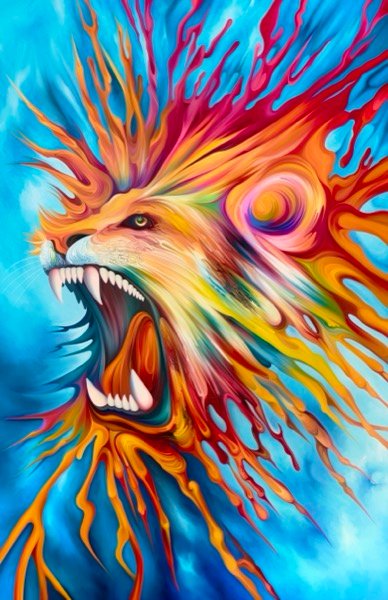
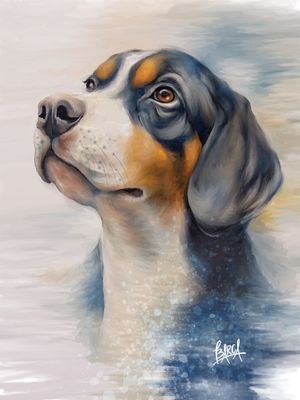
I told him about digital painting — about doing it since 1986, before AI made the phrase "digital art" mean something completely different to most people. About the years when I'd tell someone I was a digital painter and watch their face go slightly blank because the category didn't fit their mental model of what art was. Painting on a computer? That's graphic design. That's not real painting. The gatekeepers had opinions about my medium too.
He laughed. Not dismissively — recognizingly. "It doesn't matter what they think the category is," he said. "It matters what the work is."
That's the whole thing, really. That's the entire philosophy compressed into one sentence. Not whether the establishment approves your medium. Not whether critics have words for what you're doing. Whether the work itself is real, whether it has weight, whether it came from somewhere genuine.
The Parallel That Matters
I'm not comparing my career to David Choe's — that would be absurd, and I wouldn't insult him by doing it. But there's a structural parallel in the experience of being an artist who doesn't fit the sanctioned categories, and I think it's worth naming.
When David started painting murals, galleries didn't want street artists. The work was on walls, not canvases. It wasn't collectible in the traditional sense, it wasn't archivable, it wasn't the kind of thing you hung in a white room with good lighting and a price tag that signaled seriousness. He did it anyway.
When I started painting digitally — and we're talking the early 1990s, when the tools were genuinely primitive and the skepticism about digital work as a serious medium was total — the fine art world had no framework for it. It wasn't oil on linen. It wasn't watercolor. It wasn't "painterly" in the way that earned respect. I did it anyway.
Both of us, in our very different ways, were doing something the institutions hadn't approved. And both of us kept doing it because the work was real. That's the only criterion that actually survives.
What Going Your Own Way Actually Costs
People romanticize independence in ways that erase the friction of it. Going your own way isn't a slogan — it's years of watching people who followed the approved path get the institutional support, the critical coverage, the gallery representation, while you keep working in whatever space you've carved out because you don't know how to stop.
David did hard time in that friction. He has talked openly about rough periods — financial stress, isolation, making choices that didn't make sense to anyone around him. Taking Facebook stock instead of cash was considered eccentric at the time. Nobody knew what that company was going to become. He took the stock because he believed in the work he'd done and he took the bet. That's not genius — that's faith in your own judgment when nobody else shares it.
I know that feeling. Thirty-five years of building a body of work in a medium that changed meaning on me twice — first when digital art became accessible to everyone with a laptop, and again when AI generation turned "digital artist" into a phrase that could mean anything. Each time the ground shifted, I had to keep working anyway. Not because I was sure it would pay off. Because the work was the thing, not the reception of it.
What It Means to Be an Independent Artist in 2026
The gatekeepers aren't gone. They've just moved. Used to be the gallery system and the critical establishment. Now there's the algorithm, the platform, the trending sound, the viral format. Different gatekeepers, same fundamental problem: they reward conformity, and conformity is death for anyone making work that comes from somewhere specific.
What David Choe did in 2005 — and what I think he represents at a deeper level than the money — is the decision to keep making the work on his own terms and trust that its reality would eventually find an audience. The Facebook mural story is told as a lottery win, but that framing misses what actually happened. He made real work for real reasons and the world caught up.
That's the model. Not the $700 million — the years of painting before anyone was paying attention. The conviction that the work itself was enough reason to keep going.
I'm still working on that conviction. But that night in the Valley, talking to someone who had lived that philosophy at a scale I've only observed from the outside — it reminded me what the work is for. Not validation. Not the right people saying the right things in the right rooms. The work itself. The next painting. The next decision made in the silence of the studio, before anyone else has seen it.
That's the thing worth protecting. Everything else is noise.